Pearl Grading: Lustre, Nacre and What Sellers Won't Say
Why AAA is not a real standard, which grading factors change what you see, and how nacre thickness decides how long a pearl stays bright.
Reviewed by Maya Ellis · Updated Aug 19, 2026
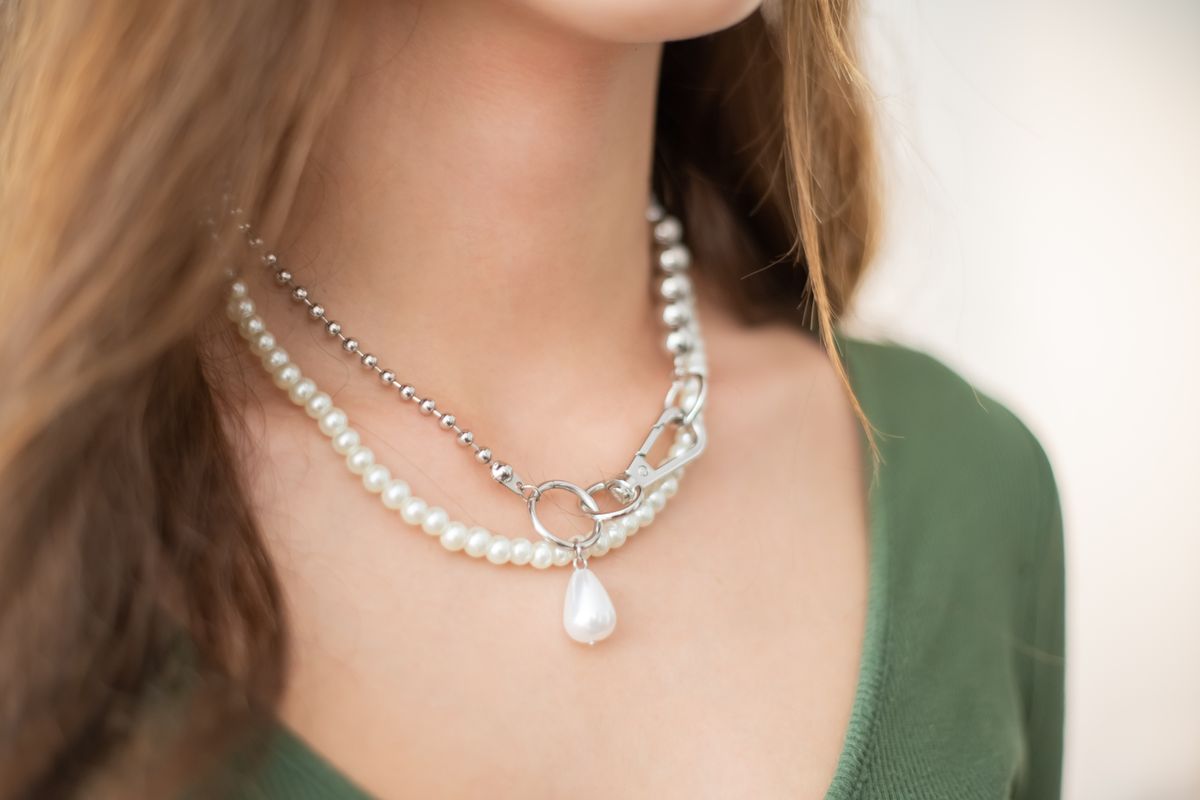
Pearl grading looks like a scale and behaves like a house style. There is no regulator and no universal AAA. What makes a pearl look expensive is lustre; what keeps it looking that way in ten years is the nacre beneath.
What actually changes what you see
GIA grades pearls through seven value factors rather than letters: size, shape, colour, lustre, surface, nacre quality and matching. Ranked by how much they change what you see, the order differs from how pearls are sold.
Lustre comes first by a wide margin — the sharpness of the reflection, and the one thing that cannot be improved after harvest. Nacre thickness comes second, because it causes the lustre and sets the lifespan. Surface blemishes come third, and matter only if visible at arm’s length. Shape, size and colour mostly move the price. Matching matters on strands, where one dull pearl drags down twenty good ones.
| Type | Origin | Typical size | Nacre | Strand price |
|---|---|---|---|---|
| Akoya | Japan, China | 6–9 mm | Thin, over a bead | $250–$800 at 7–7.5 mm |
| Freshwater | Lakes, China | up to 12–13 mm | Often solid | $120–$400 at 7–8 mm |
| Tahitian | French Polynesia | 8–16 mm | Thick | from about $2,000 |
| South Sea | Australia, Indonesia | 8–20 mm | Thickest | $2,000–$8,000 at 10–12 mm |
Why “AAA” means nothing on its own
It is a trade convention, not a standard: GIA does not grade pearls with letters. Retailers build their own scales, and they do not line up. One publishes A to AAAA across freshwater, Tahitian and South Sea; another uses A to D for Tahitian; Akoya sellers use A to AAA plus a separate Hanadama certificate. Ask what the grade means in that shop: a lustre description, a clean-surface percentage, and a nacre thickness.
Nacre thickness is the lifespan
A pearl is layers of nacre the mollusk keeps depositing. Bead-nucleated pearls grow that coating over a shell bead; tissue-nucleated freshwater pearls are nacre throughout. Time in the water sets the thickness, which is why the large saltwater types carry more: South Sea nacre is described in millimetres, Akoya in fractions of one. A thin coating looks bright under shop lighting, then dulls or shows the bead. Solid-nacre freshwater pearls cannot peel that way.
How to judge lustre in the room
Step away from the overhead light. Hold the pearl at arm’s length and watch the reflection of a window or phone light on its surface. Judge the edge of that reflection, not its brightness: a sharp, almost mirror-like edge means dense, well-aligned nacre; a soft blur means light scattering before it returns. Check the drill hole too — if you can see the nucleus at the rim, the coating is thin. Then roll the strand and look for one pearl that does not keep up with the rest. A strand is only as good as the chain and clasp holding it, and those metals raise the same base-metal question.
FAQ
- Is AAA a real pearl grade?
- No. GIA grades pearls on seven value factors, not letters. AAA is a seller's tier and differs between shops.
- Lustre or size, which should I pay for?
- Lustre. A small pearl with a sharp reflection reads better than a milky larger one.
- Do freshwater pearls last as long as Akoya?
- Often longer. Freshwater pearls are usually solid nacre, while Akoya carry a thin coating over a bead.
Maya Ellis
Writes about garment construction, leather goods and footwear specs. Started in retail floor management before moving to editorial research. How we research.