Glove Warmth Is the Lining: Wool, Fleece, Primaloft and Thinsulate Compared
Glove warmth comes from the lining: wool, fleece, Primaloft and Thinsulate compared, plus what touchscreen fingertips and wet hands cost.
Reviewed by Tessa Marlow · Updated Oct 12, 2026
The numbers first
- Wool's advantage is not the clo number but the wet behavior: it absorbs about 30% of its weight in moisture before feeling wet and keeps insulating while damp, at the cost of slow drying.
- Thickness also costs dexterity: 3M lists type U insulation at 0.4 cm thick at 40 g/m² and 2.1 cm at 200 g/m², and a 2 cm pad inside a fingertip is not a precision instrument.
- Hands that go desk-to-door and never stay outside for long overpay for the 200 g/m² weight and pay again in dexterity — a 2 cm pad inside a fingertip cannot feel a zipper pull, let alone a coin slot.
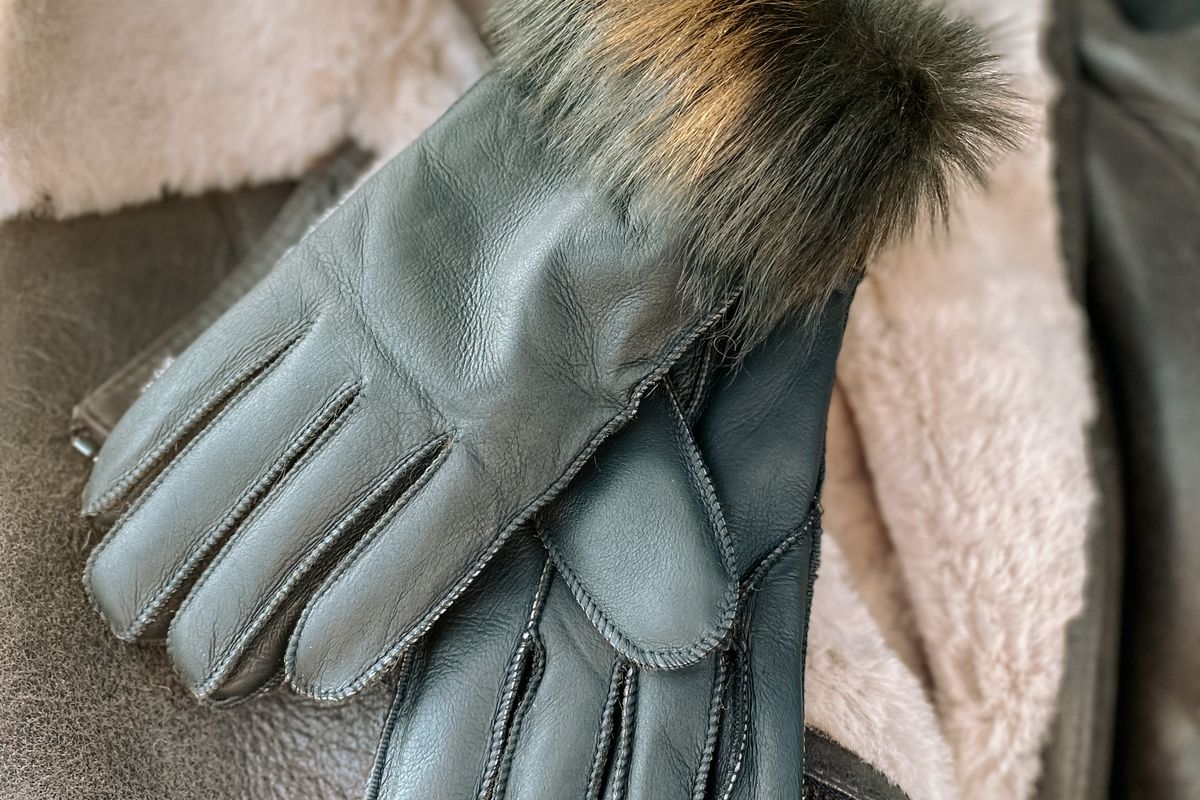
The shell blocks wind and takes the abrasion; the lining does the insulating. Two gloves with identical outer leather can be a season apart, and the entire gap sits inside the shell.
The lining materials
Insulation works by trapping air; the governing spec is mass per area in grams per square meter, read with thermal resistance in clo — one clo keeps a seated person comfortable at about 21 °C (70 °F).
| Lining | Published data | When damp | Dexterity |
|---|---|---|---|
| Merino wool knit | Absorbs roughly 30% of its weight in moisture while still feeling dry | Keeps insulating, dries slowly | Good in thin knits |
| Polyester fleece | No clo rating on labels; loft-based | Dries fast, loses loft once saturated | Good |
| Primaloft Gold | 0.92 clo per oz/yd², rated near 500–550 fill down | Hydrophobic, quick-drying | Good |
| Primaloft Silver / Black | 0.79 clo (~450 fill) / 0.65 clo (~350 fill) | Same family, lower clo | Good |
| Thinsulate type U | 0.9 clo at 40 g/m²; 1.5 at 100; 3.0 at 200 | Fibers absorb under 1% of weight in water | Falls as g/m² rises |
For warmth-to-weight, the engineered synthetics lead. PrimaLoft’s tiers run Gold at 0.92 clo, Silver at 0.79 and Black at 0.65 per ounce per square yard, quoted by outerwear makers as equivalent to 500–550, 450 and 350 fill-power down. 3M’s Thinsulate data sheets publish clo by basis weight — 0.9 at 40 g/m², 1.5 at 100, 3.0 at 200 — and note the fibers absorb less than 1% of their weight in water. Wool’s advantage is not the clo number but the wet behavior: it absorbs about 30% of its weight in moisture before feeling wet and keeps insulating while damp, at the cost of slow drying.
Reading the insulation label
A winter glove hangtag usually prints a brand tier name and sometimes a basis weight, and the two are not equal in value. PrimaLoft tiers run Gold, Silver and Black in descending warmth per ounce; Thinsulate prints a type letter plus a grams-per-square-meter figure. The gram figure is the one worth hunting for, because the same brand name spans an enormous range: 3M’s type U data runs from 0.9 clo at 40 g/m² to 3.0 clo at 200 g/m², five times the thermal resistance for five times the fabric weight. A label that says only “Thinsulate” without a weight could be either extreme.
Names with no data behind them deserve the discount. “Arctic”, “thermal” and “expedition” describe nothing measurable; if a label gives no grams per square meter, no tier name and no clo, the warmth claim cannot be checked against anything. Licensed insulations publish their numbers precisely because a verifiable claim is what their licensing fee buys.
One further habit: check whether the glove names an insulation at all. Knit fashion gloves and many leather dress gloves carry no insulation label because there is no insulation to name — the lining is a soft backing, and the warmth comes from the shell’s weave alone. That is a legitimate construction for a fall glove, but it should be read as the absence of a warmth spec rather than as modesty on the brand’s part.
Thickness is the tax
The shell is sized to the hand, and the lining consumes the room inside it — a thin cashmere or silk liner alone can cost a quarter to half a size, which is why lined gloves pinch in an unlined size. Thickness also costs dexterity: 3M lists type U insulation at 0.4 cm thick at 40 g/m² and 2.1 cm at 200 g/m², and a 2 cm pad inside a fingertip is not a precision instrument.
Liners and layering
The escape from the thickness tax is two layers: a thin liner glove under a shell or a mitten. The liner’s job is not to insulate on its own but to trap a second still-air layer and to keep skin off a damp shell. Silk and thin merino liners add little bulk, so the pair often ends up warmer than one thick glove of the same total weight, while keeping the dexterity of the thinner piece where it counts.
Mittens beat gloves at equal weight because the fingers share one warm volume instead of insulating each one separately; the cost is everything a fist does. Convertible mittens, with a flap that folds back to expose the fingers, split the difference and are the standard answer for anyone who needs to handle keys, tickets or a phone mid-walk. The trade is structural: the flap and its fastener add a stiff spot along the knuckle line, and the open mode is never as warm as a true glove because the shell is cut for a mitten shape.
Touchscreen fingertips
Capacitive screens need a conductive touch, and every lining in the table above insulates. Touchscreen gloves weave silver-coated or carbon thread into the thumb and index — sometimes the middle — and the implementation matters more than the label. Coated fingertips wear off with abrasion and washing; knit-in thread holds up. A glove with one conductive finger cannot pinch-zoom, and a thick glove with a small patch demands a firmer tap than a thin liner with full-fingertip coverage. The conductive zone is also a slightly thinner, less insulating spot on exactly the finger that gets coldest.
Wet hands
Dampness decides which lining survives the day. Wool keeps insulating while wet and keeps going for hours; the synthetics dry faster and hold their clo because the fibers barely absorb water; leather soaks, stiffens and takes longest to recover. A waterproof or coated shell keeps the lining dry; without one, the best lining is merely slow to fail. Carry a spare pair if the day involves slush.
Where the wrong lining costs you
Match the lining to the failure mode you actually meet. Commuters who handle slush, puddles and wet leashes lose more to damp than to cold, so the fast-drying synthetics earn their lower clo number; a wool-lined glove that keeps insulating while wet still has to dry on a radiator overnight. Hands that go desk-to-door and never stay outside for long overpay for the 200 g/m² weight and pay again in dexterity — a 2 cm pad inside a fingertip cannot feel a zipper pull, let alone a coin slot. Anyone driving in lined gloves wants the thin end of the range and a supple shell, because a stiff winter gauntlet is worse on a wheel than no glove at all. A touchscreen claim on the heaviest weight is close to decoration too: the pad is too thick to register a reliable tap, whatever the conductive thread does.
Lining choice starts from the hand itself: glove sizing runs on two numbers, and the same measure-first logic covers hat sizing; how to read a spec sheet covers where these numbers appear.
More in Accessories
FAQ
- Which glove lining is warmest for the weight?
- The engineered synthetics. 3M's data sheets list Thinsulate type U at 0.9 clo at 40 g/m² and 3.0 clo at 200 g/m², while Primaloft Gold is rated at 0.92 clo per ounce per square yard, roughly the efficiency of 500 to 550 fill-power down. Wool wins on damp behavior rather than on clo per gram.
- Do touchscreen gloves keep working after washing?
- Usually, if the conductive material is knit in rather than coated. Coatings wear off with abrasion and washing; knitted silver or carbon thread holds up better. Hand washing and air drying is the safer routine for any conductive glove.
- Why do lined gloves fit smaller than the same size unlined?
- The lining occupies interior volume inside a fixed shell. A thin cashmere or silk liner can consume the better part of a quarter to half a size, so a lined glove in your unlined size pinches at the fingers while the same shell unlined fits.
Second Look
Every figure used above, with the section it appears in. If a number here does not match the page you are reading, trust the page — and tell us.
- 30%
- The lining materials
- 40 g
- The lining materials
- 1%
- The lining materials
- 200 g
- Reading the insulation label
- 0.4 cm
- Thickness is the tax
- 2.1 cm
- Thickness is the tax
- 2 cm
- Thickness is the tax
Tessa Marlow
Writes about garment construction, leather goods and footwear specs. Started in retail floor management before moving to editorial research. Our standards.