Hat Sizing: Crown Circumference, Brim Width and the cm Gap
Head circumference decides whether a hat stays on; brim and crown decide whether it looks right. How to measure, convert and choose between sizes.
Reviewed by Maya Ellis · Updated Sep 10, 2026
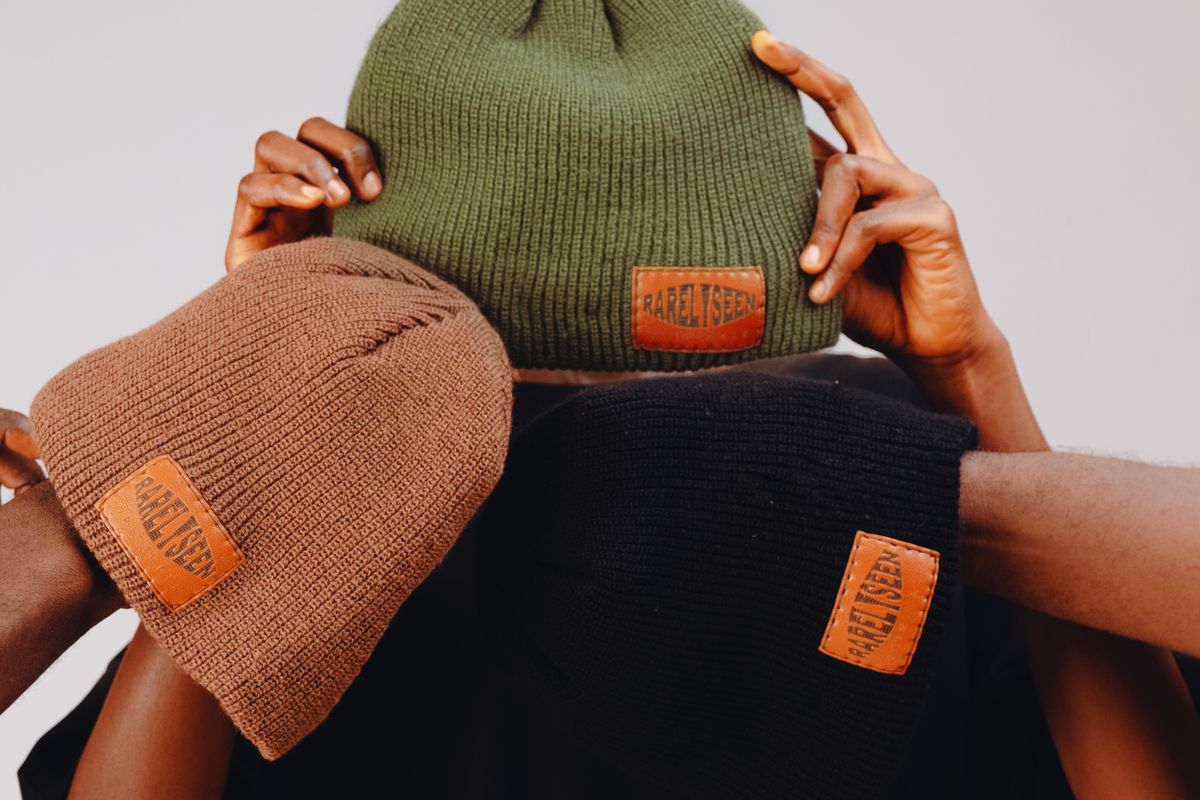
Hat sizing is one measurement translated into three systems: circumference in centimetres for Europe, that circumference divided by pi for US fitted sizes, and S, M, L bands that each cover several centimetres. The measurement is the part people get wrong.
Where the tape goes
Wrap a soft tape about 1 inch (2.5 cm) above the eyebrows and roughly 1/4 to 1/2 inch above the ears, passing over the widest point at the back of the skull. Keep it level and snug, not tight. Chart steps are commonly 1 cm or 1/8 inch, so a 1 cm error can move you into the next fitted size. Measure with your hair as you will wear it.
Reading the number three ways
| Head circumference | US fitted | Alpha |
|---|---|---|
| 56 cm (22 in) | 7 | S |
| 57 cm (22 3/8 in) | 7 1/8 | M |
| 58 cm (22 5/8 in) | 7 1/4 | M |
| 59 cm (23 in) | 7 3/8 | L |
| 60 cm (23 1/2 in) | 7 1/2 | L |
Adult headwear spans roughly 53 cm to 65 cm, or about 6 1/2 to 8 in US fitted sizes, with reported averages near 7 3/8 US for men and 7 1/4 for women. The same conversion logic sits behind size conversion for shoes and bags.
Between sizes, size up
Many heads land between rows. The consistent advice is to size up: a roomy hat can be taken in with a sizing strip or thicker sweatband, while a hat that pinches cannot be made bigger. Felt and straw have no give, so a hat that presses on arrival stays that way.
Brim and crown change proportion, not fit
Circumference decides whether a hat stays on; brim and crown decide whether it looks right. Typical brims run around 2.0 inches on a trilby, 2.5 to 3.0 on a fedora, 3.0 on a Panama and 3.0 to 4.0 on a bucket. Wider brims suit broader builds and taller frames; shorter frames read better under about 2.5 inches. Anything under 3 inches leaves ears and lower neck exposed.
Why knit hats size differently
Knit hats are built on stretch and recovery, not a fixed circumference, so they are sold as a fit range. Guidelines commonly place S at 53–56 cm, M at 56–58 cm and L at 58 cm and above, and a beanie may sit a couple of centimetres below your measured head size by design. Woven hats have no such give, and a bucket sits between: unstructured, but with a fixed band. A scarf over the hair meets the same volume problem, which silk scarf sizes covers from the other direction.
Buy for the band, not the crown. The band is the only part that has to fit; everything above it is proportion.
FAQ
- How do I measure my head for a hat?
- Wrap a soft tape about 1 inch above your eyebrows and just above your ears, over the widest point at the back of the skull.
- What should I do if my head falls between two hat sizes?
- Size up. A roomy hat can be taken in with a sizing strip, while a hat that pinches cannot be made bigger.
- Do knit hats use the same sizing as felt hats?
- No. Knit hats are sold as a fit range because they stretch, while felt and straw have a fixed band with almost no give.
Maya Ellis
Writes about garment construction, leather goods and footwear specs. Started in retail floor management before moving to editorial research. How we research.