T-Shirt Weight Is a GSM Number: What It Measures and What It Leaves Out
GSM is grams per square meter of finished knit. Here is how the number maps to weight classes, opacity and drape, and what it never tells you.
Reviewed by Tessa Marlow · Updated Oct 10, 2026
The numbers first
- A 180 GSM tee is one that puts 180 grams of fabric into every square meter of surface area.
- The range for jersey tees runs roughly 120 to 220 GSM.
- Under 150 GSM is lightweight: sheer on white colors, quick to dry, prone to stretching at the neck.
- Around 150 to 180 GSM is the midweight band where most retail tees sit.
A t-shirt’s weight number is a density figure: grams per square meter of finished knit. It is not thickness, and it is not a quality grade. A 180 GSM tee is one that puts 180 grams of fabric into every square meter of surface area. Read the number as mass per area and most marketing around it collapses.
The weight classes, with the ounce conversion
The range for jersey tees runs roughly 120 to 220 GSM. Under 150 GSM is lightweight: sheer on white colors, quick to dry, prone to stretching at the neck. Around 150 to 180 GSM is the midweight band where most retail tees sit. From 180 to 200 GSM you are in heavyweight territory, and above 200 the knit starts holding a shape of its own, more like a light sweatshirt than a tee.
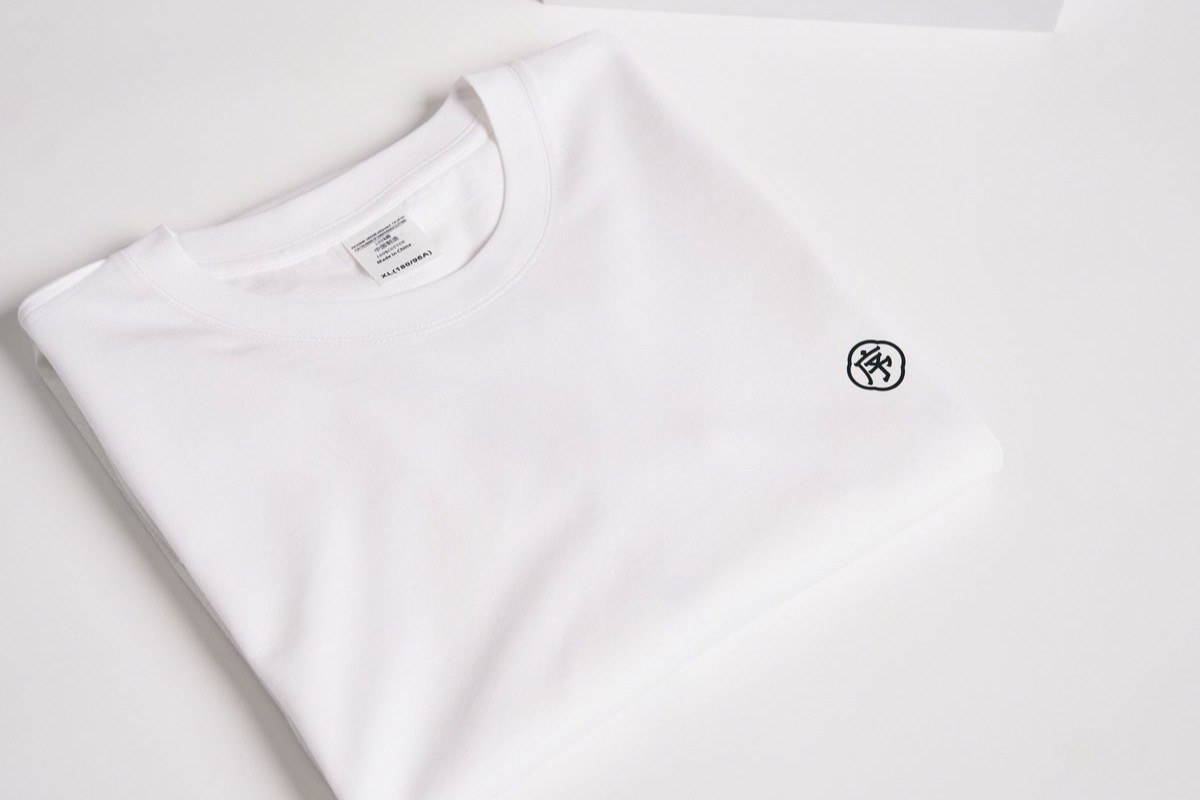
American listings quote ounces per square yard instead. The conversion is fixed: multiply by 33.9. A 4.3 oz knit is about 146 GSM. A 5.3 oz knit, the classic “heavyweight” blank, is about 180 GSM. A 6.1 oz knit is about 207 GSM. If a product page quotes one system and you think in the other, that single multiplier is the whole translation table.
How the number gets measured, and where it drifts
Labs cut a 100 square centimeter disc from the fabric with a round die, weigh it, and multiply by 100. Your tee’s real weight then drifts from the label in two directions. First, cotton shrinks: a garment that measures 180 GSM out of the box can sit near 190 GSM after a hot wash, because the same mass now occupies less area. Second, brands choose what to quote. Fabric weight and finished garment weight are different figures; the garment includes collar rib, hems and seams, and always comes out heavier than the fabric number suggests. A listing that says “200 GSM tee” quoting fabric weight is describing a heavier-sounding shirt than one quoting 200 GSM finished weight, even when the two shirts weigh the same.
Which figure a brand quotes is itself information. Brands that publish fabric weight are describing the roll of knit they bought; brands that publish finished weight have measured the shirt after making it. Neither is dishonest, but they are not comparable across listings, and the only way to compare two tees honestly is to weigh them the same way once they arrive.
Gauge changes how the same GSM feels
One more number the label omits: knit gauge, the stitches per inch on the machine that made the fabric. Gauge decides how the same mass is arranged. A tight gauge packs small stitches close together, so the surface reads dense and smooth and the collar holds a crisp line. A loose gauge spaces the same yarn into bigger loops, so the fabric breathes, drapes with more give, and shows the grid of the knit under light.
Two 180 GSM tees at different gauges read as different fabrics in the hand, which is why weight alone cannot predict how a tee wears. The density figure counts mass per area; the gauge decides where that mass sits. Neither appears on a US care label, which law limits to fiber content and care instructions. A brand that publishes both figures is telling you it can trace its fabric, and that is a useful signal long before you touch the shirt.
What GSM predicts, and what it does not
GSM tracks three things reliably. Opacity: on white and pale colors, under about 150 GSM the knit usually shows through, which is a measurable property of fabric mass per area rather than a judgment about style. Drape: heavier knits hang straighter and hold a shoulder line; lighter ones follow the body and wrinkle softer. Shape retention: a 190 GSM collar resists the bacon-curl wash cycle that a 140 GSM collar cannot.
What actually decides lifespan
GSM does not predict durability. That job belongs to fibre staple length and yarn twist, the same variables that decide pilling: a dense, heavy tee knit from short fibre will fuzz and pill on schedule, while a lighter long-staple knit can stay clean for years. Weight is a multiplier of whatever yarn quality sits underneath, not a grade of it.
Pilling shows up where the fabric rubs: under the arms, along the side seams, across the front where a bag strap crosses. Short fibres work loose from the yarn surface and knot into balls, and a heavy knit holds those balls tighter than a light one, so the damage reads worse on the heavier shirt. A combed or long-staple yarn resists the whole cycle because the fibres are long enough to stay locked in the twist. None of this is visible on a rack, which is why the fibre line on the label — combed cotton, pima, supima — carries more information about lifespan than the GSM figure does.
Weighing a tee the listing does not rate
Plenty of listings never quote a weight, and two checks stand in for the number without any tools. Hold the fabric up to a lamp: a knit under about 150 GSM in white will show the bulb’s outline through a single layer, and the evenness of the glow tells you whether the knit is consistent. Pull the collar rib between your thumbs and let go: a light, low-twist rib relaxes slowly and wavers, a heavier one snaps back to shape.
The third check needs a kitchen scale. Weighing a shirt gives a finished-garment figure, always heavier than the fabric GSM, but it compares honestly against another tee weighed the same way. That comparison is the useful move: two numbers produced identically beat one number produced who knows how. Convert to GSM only if you also measure the area, which nobody does at home.
When the light tee is the right answer
Lightweight has a case the heavyweight marketing ignores. A 140 GSM tee dries fast, packs flat, and follows the body under a shirt or overshirt instead of stacking. In heat, a lighter knit in white releases heat better than a dense one holding sweat. The trade is lifespan at the collar: the wash cycle a 190 GSM rib shrugs off curls a 140 GSM collar within a season or two, and white lightweight fabric goes sheer first.
So the question is not which weight wins but which failure you would rather live with. Choose heavyweight for a tee worn alone and washed weekly. Choose lightweight for layering, for sink washes on the road, and for anyone who finds a dense 200 GSM knit unbearable in summer. Midweight around 150 to 180 GSM splits the difference, which is why most of the market sits there. For the variables GSM sits on top of, cashmere ply and gauge runs the same logic through knitwear, and how to read a spec sheet covers the rest of the figures a product page should carry.
More in Wardrobe
FAQ
- What GSM is a normal t-shirt?
- Most retail tees sit between 150 and 180 GSM. Under 150 is lightweight and semi-sheer on white fabrics; 180 to 200 is the heavyweight range; anything above 200 GSM is a specialty knit that holds its own shape.
- How do I convert oz per square yard to GSM?
- Multiply by 33.9. A 5.3 oz knit is about 180 GSM, a 4.3 oz knit about 146 GSM. American listings quote ounces per square yard, almost everyone else quotes grams per square meter, and they describe the same fabric.
- Does a higher GSM mean a better t-shirt?
- No. GSM measures mass per area, not fibre quality. A heavy tee knit from short-staple yarn can still pill and lose shape, because pilling follows fibre length and yarn twist, not fabric weight.
Second Look
Every figure used above, with the section it appears in. If a number here does not match the page you are reading, trust the page — and tell us.
- 180 GSM
- Introduction
- 220 GSM
- The weight classes, with the ounce conversion
- 150 GSM
- The weight classes, with the ounce conversion
- 200 GSM
- The weight classes, with the ounce conversion
- 4.3 oz
- The weight classes, with the ounce conversion
- 146 GSM
- The weight classes, with the ounce conversion
- 5.3 oz
- The weight classes, with the ounce conversion
- 6.1 oz
- The weight classes, with the ounce conversion
Tessa Marlow
Writes about garment construction, leather goods and footwear specs. Started in retail floor management before moving to editorial research. Our standards.