Size Conversions for Shoes and Bags, US / UK / EU / cm
US, UK, EU and JP shoe sizes sit on different scales, and lasts make any conversion approximate. Foot length in centimetres, plus bag measurement, explained.
Reviewed by Maya Ellis · Updated Sep 6, 2026
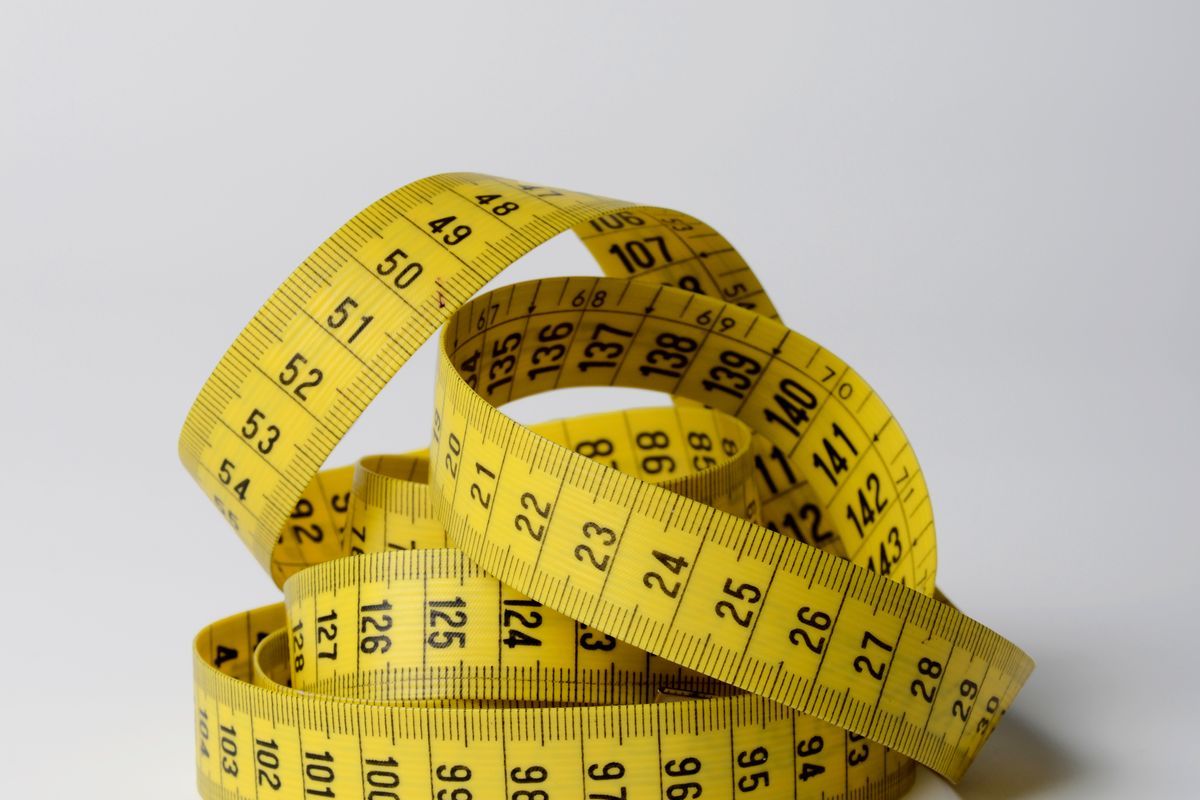
The number on the box describes a mould, not your foot. That is why one foot length can need a US 8 in one brand and an 8.5 in another, and why the centimetre travels better than any national scale.
Foot length is the number that travels
ISO 9407 defines foot length as the horizontal distance from the centre of the back of the heel to the end of the most prominent toe, measured standing barefoot with weight distributed evenly. Practically: measure in the evening, when feet are longest, and take the larger.
Why one foot measures three different numbers
Socks are the first variable. The standard defines foot length barefoot or in thin hose, so a thick sock adds length that gets baked into your Mondopoint figure, and into the size you order from it. Load is the second: a foot bearing weight spreads and lengthens, so a reading taken sitting or leaning back comes up short. Time of day and the gap between your two feet make up the rest. Measure barefoot, then allow for the sock you will actually wear.
The conversion table
| Foot length | Mondopoint | EU | UK | US men | US women | JP |
|---|---|---|---|---|---|---|
| 25.0 cm | 250 | 39 | 6 | 7 | 8 | 25.0 |
| 26.0 cm | 260 | 41 | 7 | 8 | 9 | 26.0 |
| 27.0 cm | 270 | 42 | 8 | 9 | 10 | 27.0 |
| 28.0 cm | 280 | 44 | 9 | 10 | 11 | 28.0 |
Read down the foot-length column, not across the rest. The scales do not share a step size: the EU counts Paris points of two-thirds of a centimetre, the UK counts barleycorns of one-third of an inch, and Japan prints foot length itself, though its shoes are built about a centimetre longer inside. Charts disagree by half a size in places; ISO/TS 19407 is a conversion specification, not a formula.
Why one foot length buys different shoes
The last is the form the shoe is built around. It fixes length, ball girth, instep height, heel volume and toe spring. “EU 42” describes length only, so two factories can build a 42 on different lasts and produce shoes that fit nothing alike. A last wrong at the ball of the foot does not improve with breaking in.
Kids’ sizes and the crossover point
US children’s sizes run 1 to 13 and then restart at 1 for youth; there is no children’s 14. Where that joins women’s sizing depends on brand and width grading, and typically lands in the youth 4–7 range by foot length, not at a fixed number.
Bags: exterior, interior and the opening
Bag dimensions published on spec sheets are normally exterior. Leather thickness, lining and seams eat into the interior, and a framed zip opening can be several centimetres narrower than the body. Fill a soft bag to shape before measuring, or the depth reads low.
One inch is exactly 25.4 mm, so a 30 cm bag is 11.8 in. To match a bag you own, record the width at the widest point, the height excluding handles, the depth at the base gusset, and the clear opening — then measure your largest item against the opening.
FAQ
- Why do the same foot measurements give different sizes in different brands?
- A size labels the last, not the foot. Each brand shapes its own last, so length, ball girth, instep height and heel volume vary between shoes marked the same size.
- Should I measure my feet in the morning or at the end of the day?
- At the end of the day, standing, with weight on the foot. Feet spread under load, so a morning measurement can be a half size short.
- Are bag dimensions exterior or interior?
- Usually exterior. Leather thickness, lining and seams consume interior space, so treat the published depth as an upper bound and check the opening.
Maya Ellis
Writes about garment construction, leather goods and footwear specs. Started in retail floor management before moving to editorial research. How we research.